
Oil & Gas Soil Remediation
Restore Salt-Impacted Soil After a Produced-Water Release

Produced Water Remediator (PWR) is a concentrated liquid soil treatment developed to support the recovery of land affected by produced-water and saltwater releases.
By working with natural soil processes, PWR helps manage excess sodium and salts so impacted soil can begin rebuilding healthy structure and supporting vegetation again.
Documented Oklahoma Field Results
Up to 78.9%
Reduction in total soluble salts
Up to 82.2%
Reduction in chlorides
27 – 34 Days
Between treatment and follow-up testing
Two Field Sites
With documented laboratory results
Results shown are from specific Oklahoma field applications. Every site is different, and results depend on soil conditions, contamination levels, weather, application methods, and other site-specific factors.
A Practical Solution for Salt-Impacted Soil
Produced water is a common byproduct of oil and gas exploration and production. Although produced water can be managed safely, equipment failures, storage-tank line ruptures, valve failures, transfer incidents, and routine site operations can sometimes result in an unintended release.
When produced water reaches the soil, high concentrations of sodium and chlorides can damage soil structure and prevent vegetation from becoming established. This can be especially challenging in clay soils, where sodium binds strongly to soil particles.
PWR was developed to help address these conditions and support the return of impacted land to productive use.
How PWR Supports Soil Recovery
PWR is a concentrated blend of ingredients formulated to enhance the soil’s natural ecological repair processes.
The treatment is designed to help release sodium from soil particles -particularly in clay soils - so salts can move through the soil profile with water rather than remaining tightly bound in the plant-growing zone.
This process can help:
Manage sodium and chloride impacts
Improve salt movement through the soil profile
Support better soil structure
Create conditions that encourage plant establishment
Help return affected land to agricultural, pasture, or other productive use
PWR is not offered as a one-size-fits-all treatment. Product quantities, dilution rates, application methods, soil preparation, and follow-up testing should be based on the conditions at each site.
Applications for Produced Water Remediation
PWR may be considered for soil affected by:
Produced-water spills
Saltwater pipeline or transfer-line ruptures
Storage-tank line failures
Valve and equipment failures
Saltwater disposal operations
Oil and gas exploration activity
Historical salt contamination
Salt-impacted pasture or agricultural land
Not sure whether PWR is appropriate for your site?
A Straightforward Field Process
(1) Analyze the Site
The affected area is evaluated to determine the extent and depth of the salt impact. Soil samples may be collected from multiple locations and submitted to a qualified laboratory for analysis.
Important information can include:
Total soluble salts
Chloride concentrations
Contamination depth
Soil type and composition
Size of the affected area
Age and source of the release
(2) Analyze the Site
The affected area is evaluated to determine the extent and depth of the salt impact. Soil samples may be collected from multiple locations and submitted to a qualified laboratory for analysis.
Important information can include:
Total soluble salts
Chloride concentrations
Contamination depth
Soil type and composition
Size of the affected area
Age and source of the release
(3) Apply PWR
PWR is mixed with water and applied as a soil drench at the recommended rate.
Application quantities and methods are developed according to the volume of soil being treated and the conditions identified during the site evaluation.
(4) Verify the Results
Follow-up soil samples are collected and tested using the same laboratory methods as the initial samples. This allows the operator, landowner, and remediation team to document changes in salt and chloride concentrations.
Vegetation recovery and soil condition can also be monitored over time.
Oklahoma Field Application No. 1
Returning a Salt-Damaged Pasture to Productive Use
A 0.58-acre tract of agricultural land had been affected by a storage-tank line rupture. Approximately two years after the release, the impacted area remained unable to support vegetation.
Testing indicated that the primary impact was within the top eight inches of soil. The site was cultivated to a depth of approximately four to six inches, treated with the recommended PWR application, and prepared for recovery.
The treatment process was completed in one day.
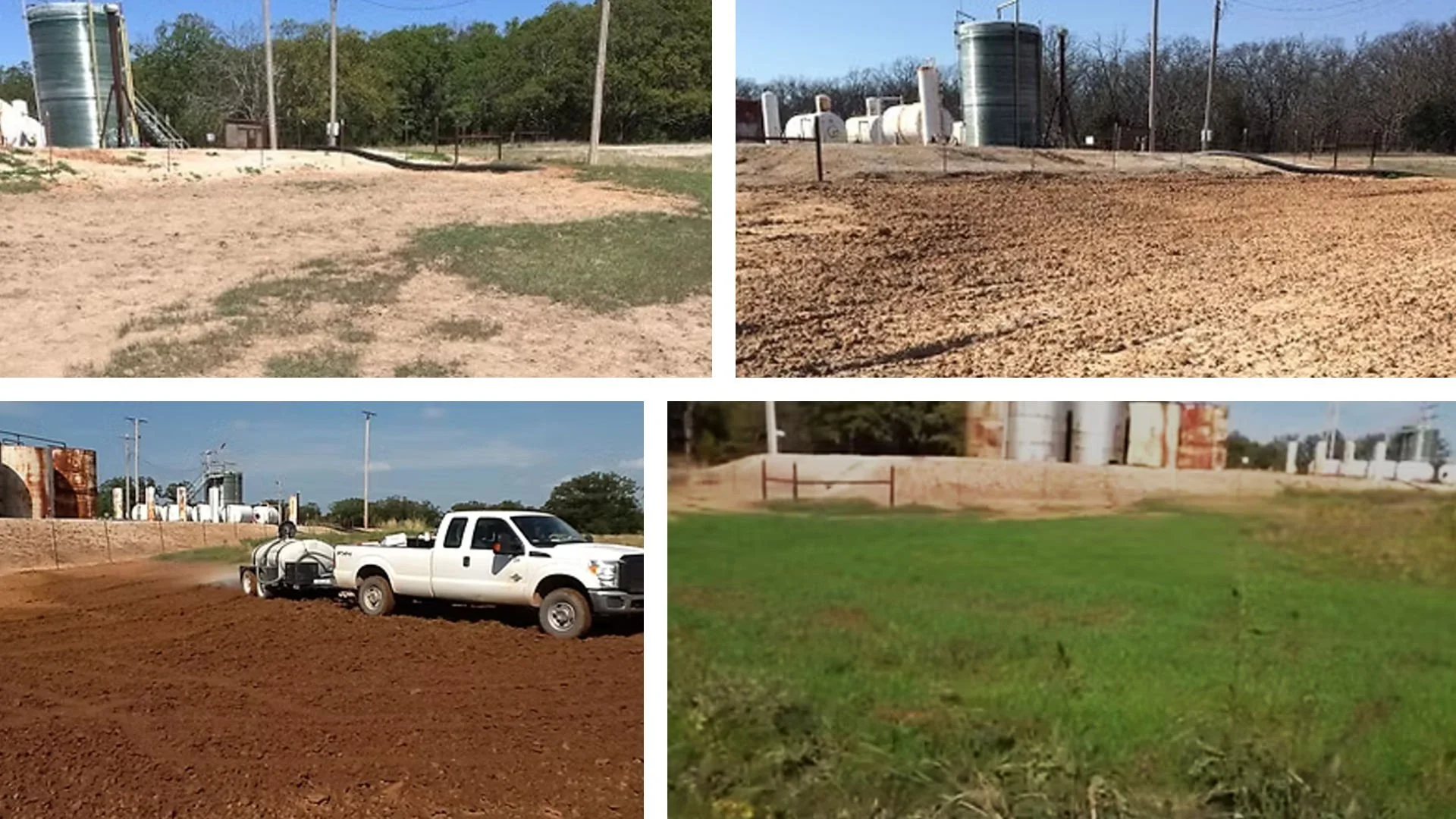
Laboratory Results After 27 Days
Total Soluble Salts
13,900 ppm before treatment
2,920 ppm after treatment
78.9% reduction
Chlorides
6,080 ppm before treatment
1,080 ppm after treatment
82.2% reduction
New Bermuda grass, Johnson grass, nettle, and other vegetation became established throughout the treated area. Examination of the plants showed healthy and active growth.
Both the energy company and the landowner reported being pleased with the cost-effective and timely results.
Oklahoma Field Application No. 2
Restoring a Larger Salt-Impacted Agricultural Site
A second produced-water release affected approximately 1.74 acres of agricultural land. The site had experienced extensive vegetation loss caused by excess sodium accumulation in clay soil.
The affected soil was cultivated, treated with the recommended PWR application, and seeded with rye grass and cow peas. The complete treatment process required two field days.
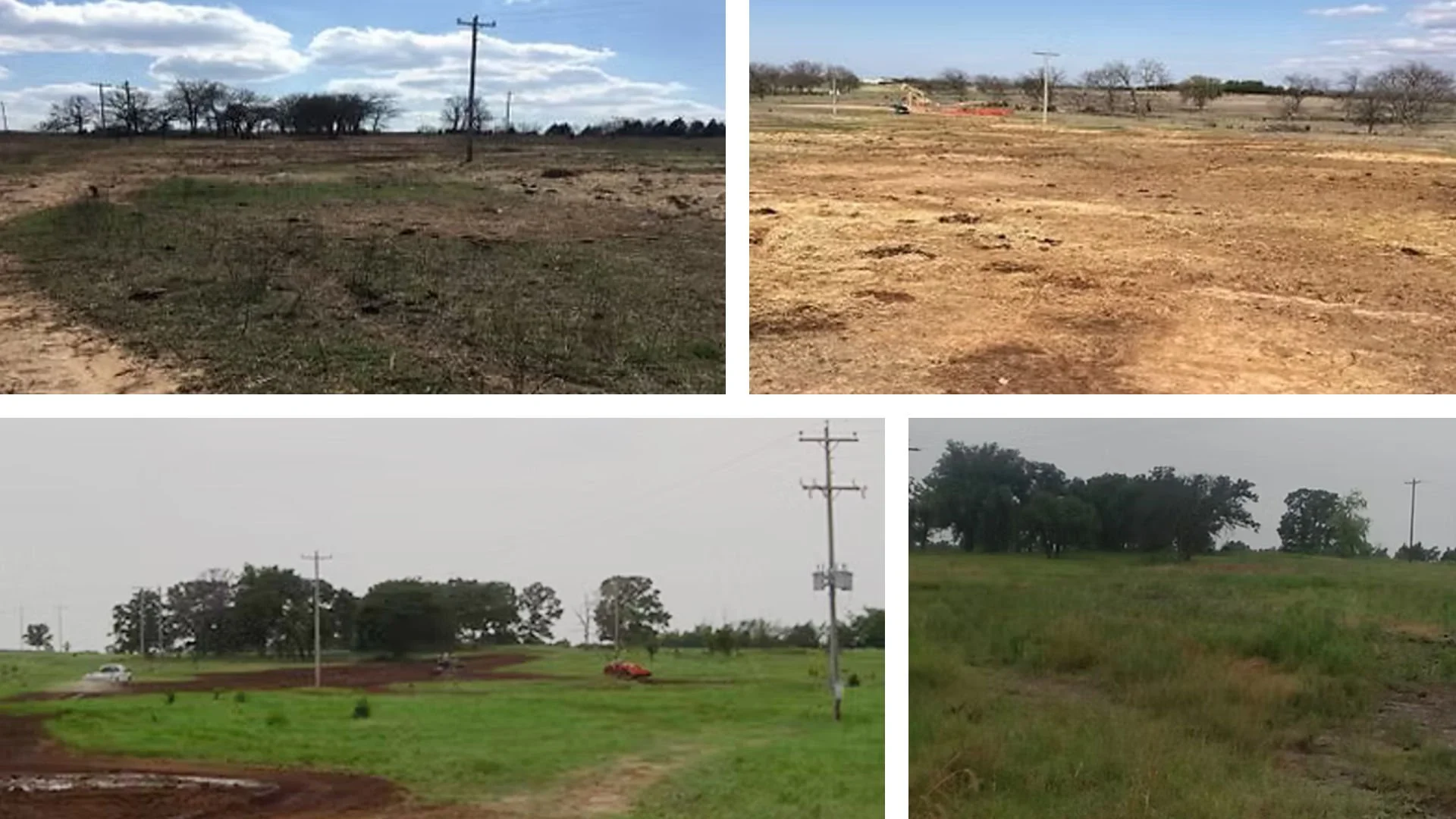
Laboratory Results After 34 Days
Total Soluble Salts
15,000 ppm before treatment
3,530 ppm after treatment
76.5% reduction
Chlorides
6,410 ppm before treatment
1,170 ppm after treatment
81.7% reduction
Seed germination was observed during the first-week site inspection. Cattle also began grazing the new vegetation within the treated area, demonstrating that plant growth had returned to soil that had previously been unable to support vegetation.
Every Site Requires Its Own Treatment Plan
PWR application recommendations are developed around the actual conditions of the affected property.
To evaluate a site, Edwards Environmental may request:
Type and source of the contamination
Initial laboratory results
Salt and chloride concentrations
Depth of the affected soil
Approximate acreage
Length of time the site has been affected
Soil type and composition
Desired remediation timeline
Applicable regulatory requirements
Site accessibility and available equipment
Seasonal and weather considerations
Previous products or treatment methods used
Current photographs of the affected area
This information helps determine whether PWR is appropriate and how the treatment should be applied.
Field Experience With Personal Guidance
For more than 35 years, Edwards Environmental Corporation has helped customers address practical soil, wastewater, agricultural, and environmental challenges.
PWR brings that experience to the oil and gas industry through a treatment process based on field conditions—not a generic product recommendation.
George Edwards works directly with operators, contractors, consultants, and landowners to review available information, determine practical treatment options, and develop an application strategy for each site.
Bring Us Your Soil Data
If you are managing a produced-water release or evaluating salt-impacted soil, contact Edwards Environmental to discuss the site.
Please include available laboratory results, photographs, estimated acreage, contamination depth, and the desired remediation timeline.
Start With a Site Review
The first step is understanding the soil, the release, and the desired outcome.
Contact George Edwards to determine whether PWR should be considered for your project and to request a site-specific application recommendation.
Frequently Asked Questions
-
PWR is presented here as a treatment for soil affected by a produced-water or saltwater release. Contact Edwards Environmental to discuss the specific conditions and objectives of your project.
-
PWR is a liquid concentrate that is mixed with water and applied as a soil drench. The recommended rate and application method depend on soil volume, contamination levels, soil type, and project objectives.
-
In the two documented Oklahoma field applications, follow-up laboratory testing was performed 27 and 34 days after treatment. Results will vary according to site conditions, weather, preparation, application, and contamination levels.
-
Some sites may benefit from cultivation or other preparation to improve product penetration. The appropriate method depends on the depth of impact, soil composition, accessibility, and existing site conditions.
-
Yes. Initial and follow-up testing provide an objective way to understand the contamination and document changes following treatment.
-
PWR has been applied to Oklahoma sites with relatively high clay content. However, every site should be evaluated individually before a treatment program is recommended.